8846 South Redwood Road, Suite N 201 West Jordan, UT 84088
Few dental procedures have a reputation quite like root canals.
For years, root canals have been surrounded by fear, myths, and stories that make patients nervous before they even sit in the dental chair. Many people associate root canal therapy with pain, discomfort, or complicated treatment.
But modern dentistry has changed dramatically.
At Copperfield Family Dental, Dr Jeremy Mahoney and Dr Shane Stapleton regularly help patients throughout West Jordan, South Jordan, Taylorsville, and nearby communities understand that root canal therapy today is often far more comfortable and straightforward than they expected.
In reality, root canals are designed to relieve pain—not cause it.
Let’s break down why root canals aren’t nearly as scary as many patients think and why delaying treatment can often lead to bigger problems later.
Why Root Canals Have Such a Bad Reputation
Many people fear root canals because of:
- Old stories from decades ago
- Anxiety about dental procedures
- Fear of pain
- Misunderstanding what the treatment actually does
The truth is that modern dental technology, anaesthesia, and techniques have improved significantly.
Today, many patients compare root canal treatment to getting a routine dental filling.
What Is a Root Canal?
A root canal is a treatment used to save a tooth when the inner pulp becomes:
- Infected
- Inflamed
- Damaged
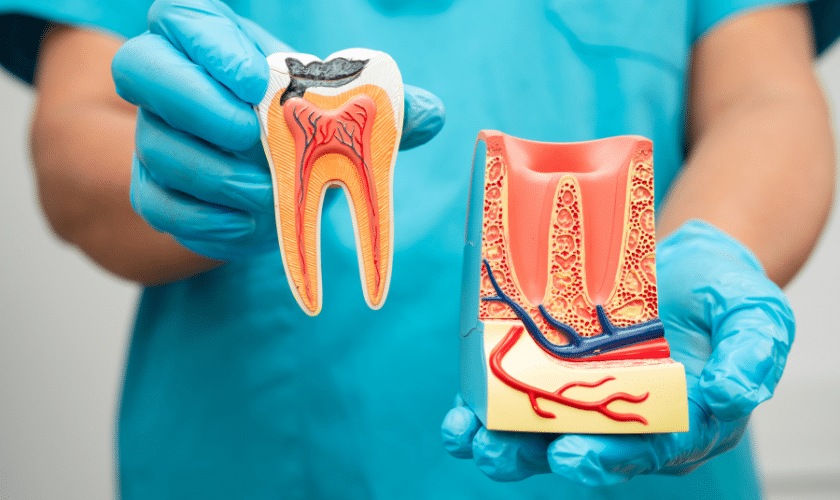
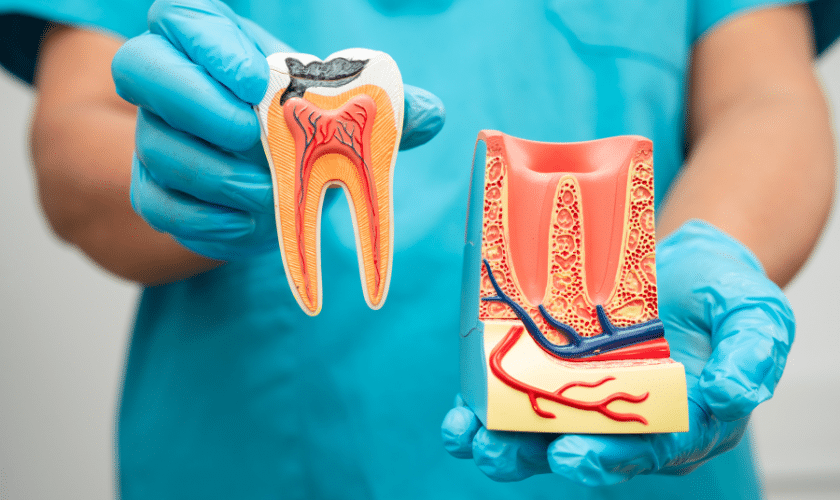
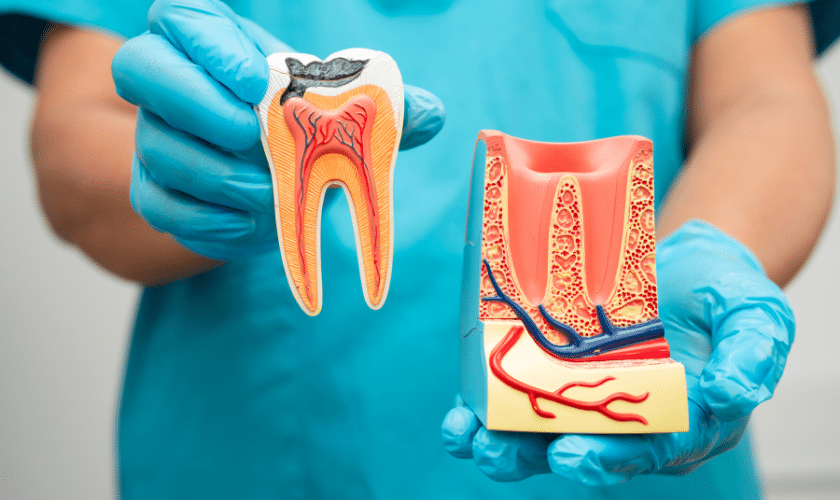
Inside every tooth is soft tissue called pulp, which contains:
- Nerves
- Blood vessels
- Connective tissue
When bacteria reach the pulp due to:
- Deep decay
- Cracks
- Trauma
- Severe infection
Patients may experience significant pain and sensitivity.
Root canal therapy removes the damaged tissue and helps preserve the natural tooth.
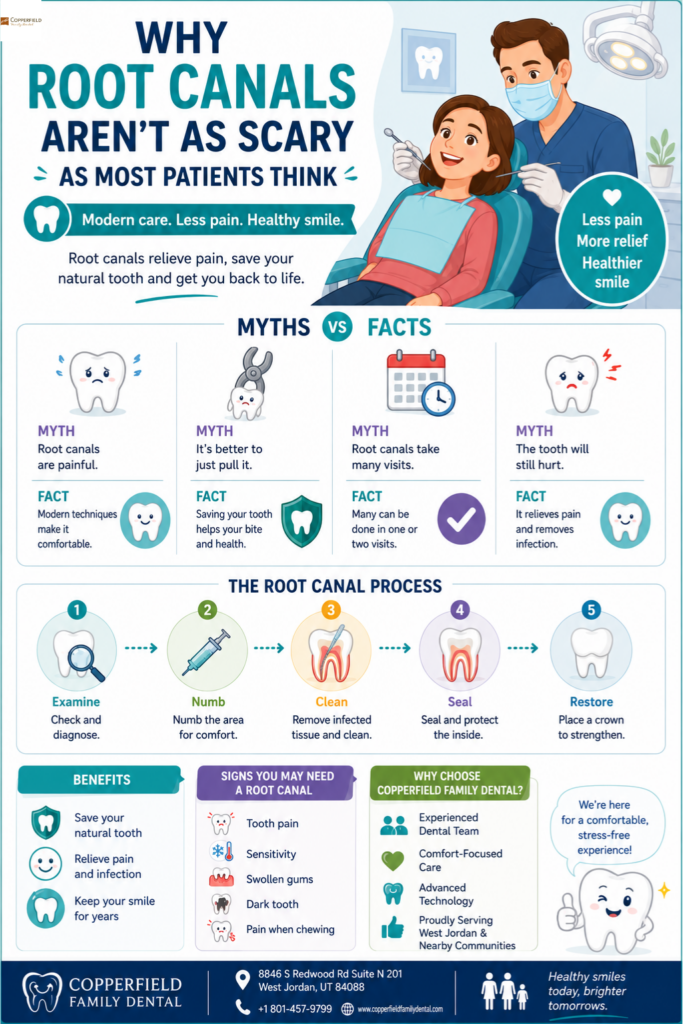
Signs You May Need a Root Canal
Many patients are unsure when tooth pain becomes serious enough to require treatment.
Common warning signs include:
- Persistent tooth pain
- Sensitivity to hot or cold
- Swollen gums
- Pain when chewing
- Darkening of the tooth
- Lingering discomfort after eating or drinking
Some patients may even experience severe pain that interferes with sleep or daily activities.
Patients searching for a root canal West Jordan solution often do so after symptoms become difficult to ignore.
Root Canals Relieve Pain—They Don’t Cause It
One of the biggest misconceptions about root canals is that the procedure itself is painful.
In most cases, the pain patients feel actually comes from:
- Infection
- Inflammation
- Pressure inside the tooth
The root canal procedure is intended to remove the source of that pain.
With modern anaesthesia and technology, patients are typically numb and comfortable during treatment.
Many patients feel relief shortly afterward because the infection has been addressed.
What Happens During a Root Canal Procedure?
Understanding the process often helps reduce anxiety.
Step 1: Examination and Imaging
The dentist evaluates the tooth and may take digital X-rays to assess:
- Infection
- Root structure
- Surrounding bone health
Step 2: Numbing the Area
Local anaesthesia is used to keep the patient comfortable throughout the procedure.
Most patients are surprised by how little they feel during treatment.
Step 3: Removing the Infection
The damaged pulp is carefully removed from inside the tooth.
The area is then:
- Cleaned
- Disinfected
- Sealed
Step 4: Restoring the Tooth
In many cases, a crown may later be placed to help strengthen and protect the treated tooth.
Why Saving Your Natural Tooth Matters
Whenever possible, dentists aim to preserve natural teeth.
Keeping your natural tooth helps:
- Maintain bite alignment
- Preserve chewing function
- Support jawbone health
- Prevent shifting teeth
Root canal therapy often allows patients to avoid tooth extraction while restoring comfort and function.
What Happens If You Delay Treatment?
Many patients postpone treatment because they hope the pain will go away on its own.
Unfortunately, dental infections typically do not resolve without professional care.
Delaying treatment may lead to:
- Worsening pain
- Increased infection
- Abscess formation
- Tooth loss
In some situations, untreated infections can affect overall health as well.
The earlier the treatment occurs, the easier the issue is often to manage.
Modern Dentistry Has Made Root Canals More Comfortable
Advancements in modern dentistry have dramatically improved patient experiences.
Today’s root canal procedures often involve:
- Better anesthesia
- Digital imaging
- Improved precision
- Faster treatment times
Many patients at Copperfield Family Dental say the procedure was much easier than they expected.
Why West Jordan Patients Delay Root Canals
Patients across West Jordan and nearby areas like South Jordan, Midvale, and Taylorsville often delay treatment because of:
- Fear
- Busy schedules
- Cost concerns
- Anxiety from past experiences
But waiting often allows the problem to become more severe and uncomfortable.
Seeking care early can help prevent more complicated dental issues later.
Is a Root Canal Better Than Extraction?
This depends on the condition of the tooth and each patient’s situation.
However, preserving a natural tooth is generally preferred whenever possible.
Root canals may help patients:
- Keep their natural smile
- Avoid shifting teeth
- Maintain better chewing function
In many cases, saving the tooth can also reduce the need for more extensive restorative treatment later.
Why Patients Choose Copperfield Family Dental
Patients throughout West Jordan trust Copperfield Family Dental because of its:
- Comfortable patient-focused care
- Modern dental technology
- Gentle treatment approach
- Personalized attention
Dr. Jeremy Mahoney and Dr. Shane Stapleton understand dental anxiety and work closely with patients to create a calm, supportive environment.
Final Thoughts
Root canals have an unfair reputation that often causes patients unnecessary fear and anxiety.
The reality is that modern root canal therapy is designed to relieve pain, preserve natural teeth, and help patients return to normal daily life comfortably.
For patients throughout West Jordan, South Jordan, Taylorsville, and surrounding communities, seeking treatment early can help prevent more serious dental problems and protect long-term oral health. Contact us if you have any doubts.
Sometimes the scariest part of a root canal is simply waiting too long to address the problem.
FAQs
1. Are root canals painful?
Modern root canal treatment is typically much more comfortable than most patients expect due to improved anaesthesia and technology.
2. How do I know if I need a root canal?
Persistent tooth pain, swelling, sensitivity, or discomfort while chewing may indicate the need for evaluation.
3. How long does a root canal take?
Treatment times vary depending on the tooth and level of infection, but many procedures can be completed efficiently.
4. Will I need a crown after a root canal?
In many cases, a crown is recommended to strengthen and protect the treated tooth.
5. Can a root canal save my natural tooth?
Yes. Root canal therapy is specifically designed to preserve natural teeth whenever possible.